- ⭐TechShe Pulse Home of SCETM, C.A.L.M. RISETM, and RISE SoftlyTM⭐
- Posts
- 🧬 Bioinformatics & Feminist Code: Rewriting the Genome with Equity in Mind
🧬 Bioinformatics & Feminist Code: Rewriting the Genome with Equity in Mind
Because if we’re going to decode the human blueprint, we might as well fix the patriarchy while we’re at it.

Patrycja Creative Collective
December 29, 2025
Let’s be honest:
Genomics and bioinformatics sound like the kind of topics people pretend to understand at conferences while slowly backing away toward the free snacks. But underneath the jargon — transcriptomics, CRISPR, variant calling — is the quiet revolution that will define the next century.
And guess who’s leading some of the most critical parts of it?
Women. Neurodivergent women. Women of colour. Polish women. Queer women. Mothers. Immigrants. Outsiders. Unconventional thinkers.
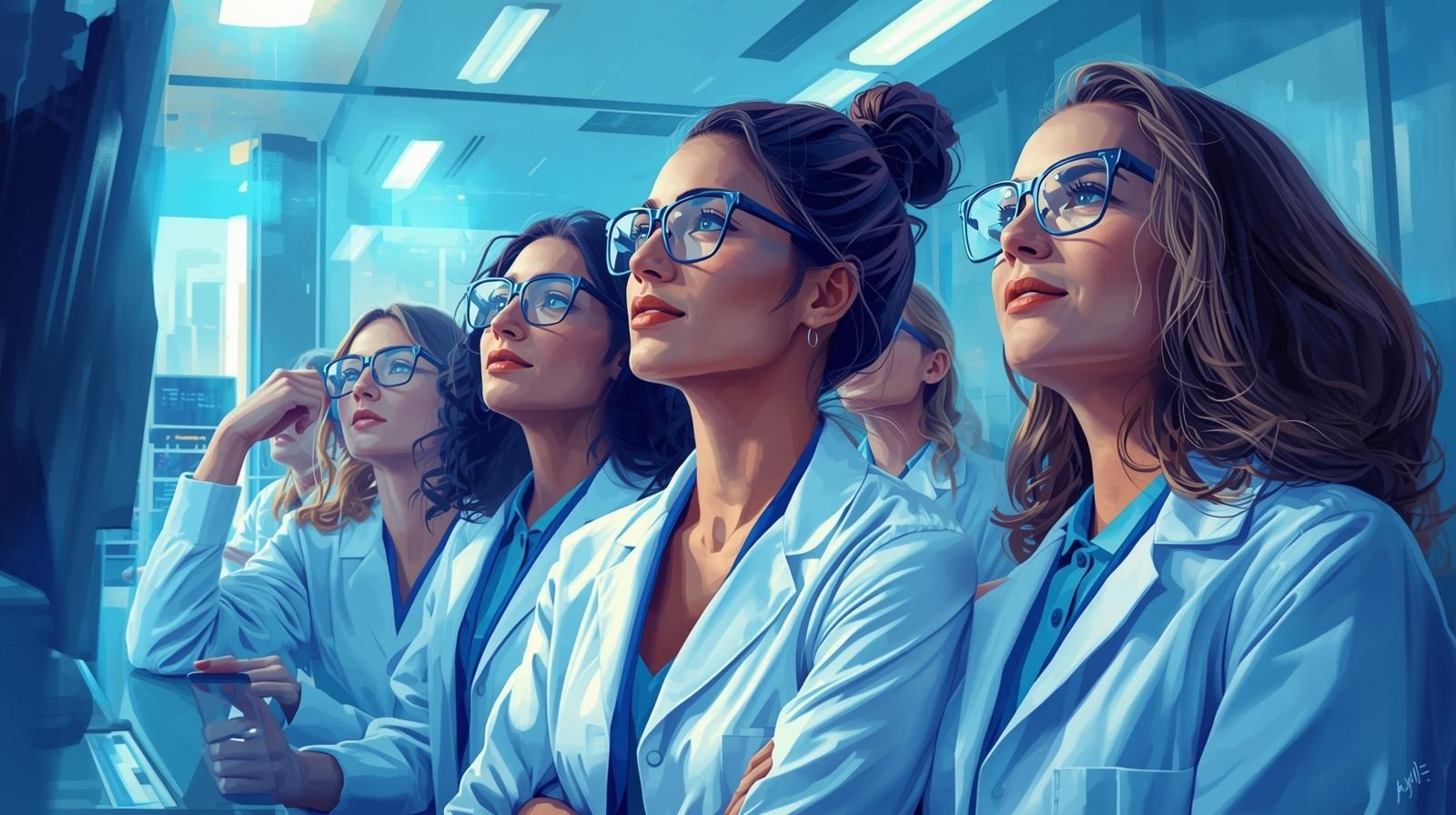
The exact people who were never supposed to lead deeptech are now rewriting the literal code of life.
This is biopower, but make it feminist.

🧬 1. When Women Enter Genomics, Medicine Evolves
The human body is complicated — but you know what’s even more complicated?
Science done by committee where half the population was excluded for 400 years.
Women in bioinformatics are forcing medicine to confront the messy truth:
Most medical datasets are dominated by male bodies.
Women’s symptoms get dismissed, misdiagnosed, or mislabeled.
Racial and genetic diversity is massively underrepresented.
A shocking number of clinical tools perform poorly on female physiology.
Enter the women rewriting healthcare with code, ethics, and zero tolerance for nonsense.
🥽 2. Women Are Reimagining What “Health Data” Even Means
Traditional biomedicine: “We measured this in 42 men in a lab in 1982, so it must be universal!”
Modern bioinformatics (led by women):
“How about we include women, neurodivergent people, LGBTQ+ communities, minorities, reproductive health, hormonal cycles, and real-life bodies that don’t fit your ‘standard model’?”
They’re building systems that understand:
menstrual cycles
pregnancy
menopause
autoimmune differences
neurodivergent biology
genomics of underrepresented populations
And they’re doing it with a design philosophy that says:
“If the data excludes us, we rebuild the dataset.”
🧪 3. Feminist AI in Healthcare: Not ‘Pink Tech,’ Just Better Science
AI has enormous potential in personalised medicine — but only if it doesn’t inherit ancient biases.
Women are fixing the pipeline:
• Cleaning datasets
Removing sexist, racist, and size-biased assumptions baked into old “norms.”
• Rebuilding diagnostic tools
Creating models that don’t default to “male baseline.”
• Designing explainable AI
Because women in healthcare don’t want a black box — they want clarity, transparency, and accountability.
• Creating inclusive bio-banks
So everybody — not just Western male bodies — is represented in genomic medicine.
This isn’t just representation.
This is scientific accuracy.

🌸 4. The Polish Deeptech Shapers in Bioinformatics (You Said Add Them — I Will)
Poland has some tremendous women shaping genomics, AI, and biomedical innovation:
Dr. Anna Wójcicka – co-founder of Warsaw Genomics, leading advanced genetic diagnostics for cancer prevention.
Dr. Marta Markiewicz – AI researcher improving medical NLP for clinical insights.
Prof. Iwona Stupkiewicz – computational modelling expert whose work influences how bio-systems and materials are understood.
These women prove deeptech isn’t “over there in Silicon Valley.”
It’s here. In Europe. In Poland. In the labs, the clinics, the codebases.
🧬 5. The Future of Personalised Medicine Is (Quietly) Feminist
Imagine a world where:
Genetic testing accounts for hormonal cycles
AI distinguishes ADHD presentations in women
cardiac algorithms stop ignoring female heart attack symptoms
Pharmacogenomics adjusts dosages based on female metabolism
Genomic research includes menopause, PCOS, endometriosis, and pregnancy immunity
neurodivergent bodies aren’t “outliers,” they’re design inputs
Women aren’t adding a “feminist angle” to genomics.
They’re correcting centuries of scientific blind spots.
💥 6. The Quirky, Motivational Section (Because TechSheThink Never Misses)
Let’s drop some truth bombs:
If women designed early medical datasets, half of modern “mystery illnesses” wouldn’t be mysteries.
If neurodivergent women wrote diagnostic algorithms, ADHD wouldn’t be a late-life surprise party.
If immigrant women curated biobanks, global medicine wouldn’t keep pretending one gene pool represents all of humanity.
Women aren’t just participating.
They’re debugging medicine.
🧠 7. How to Get Into Bioinformatics (Even If You Don’t Have a Lab Coat)
You don’t need a PhD to begin.
Start with:
Open datasets (NCBI, Ensembl, 1000 Genomes)
Tools like Galaxy, Biopython, GenePattern
Beginner courses on Coursera, FastAI, Rosalind
Practice: analysing variants, pipelines, visualisation
Follow women in the field (seriously, they share gold)
Bioinformatics is one of the few fields where passion + curiosity = real opportunity.
🌍 8. The Big Picture: Rewriting the Genome Means Rewriting the System
The genome is not just biological code.
It’s a metaphor for everything:
who gets included
who gets studied
who gets believed
who gets treated
who gets access
who gets seen
When women enter bioinformatics, the system becomes more human — and more scientifically correct.
🎤 Call to Action
This week:
follow a woman in genomics
Read one open-access research paper
explore a public dataset
Share this post with someone who loves deeptech
reflect on how data bias shows up in their own field
subscribe for more feminist deeptech insights
Because the future of medicine isn’t male.
It isn’t female.
It’s equitable — thanks to the women rewriting the biological codebase.
Reply