- ⭐TechShe Pulse Home of SCETM, C.A.L.M. RISETM, and RISE SoftlyTM⭐
- Posts
- 🌸 Feminine Intelligence + Systems
🌸 Feminine Intelligence + Systems
Beyond the Binary: Designing Tech Ecosystems That Feel Human

Patrycja Creative Collective
November 18, 2025
In a world coded by logic and optimised for speed, we rarely stop to ask:
What if technology could care?
What if our systems were designed not just to work, but to feel — to listen, to adapt, to evolve with us rather than over us?
The future of innovation won’t be built by those who move fast and break things.
It will be shaped by those who pause, breathe, and ask what needs healing before it’s rebuilt.
This isn’t about making tech “feminine” in a superficial sense.
It’s about reclaiming feminine intelligence — the kind that holds contradictions, honours intuition, and designs for wholeness.
Welcome to the new frontier: where logic meets empathy, and systems begin to feel human.

💫 Why Binary Design Fails Human Complexity
Most systems — digital or otherwise — are built on binaries.
On and off. True or false. Male or female. User or admin.
But life doesn’t move in ones and zeros.
It breathes in gradients, context, and emotional texture.
When tech relies too heavily on binary thinking, it loses its ability to represent the full spectrum of human experience.
It simplifies what should be sacredly complex.
Binary UX can’t comprehend grief.
It can’t hold a contradiction.
It can’t sense when silence means discomfort rather than consent.
And so we end up building systems that respond to input—but not to emotion.
The cost?
Disconnection. Burnout. Digital fatigue.
An entire generation feels unseen by the very tools meant to connect them.
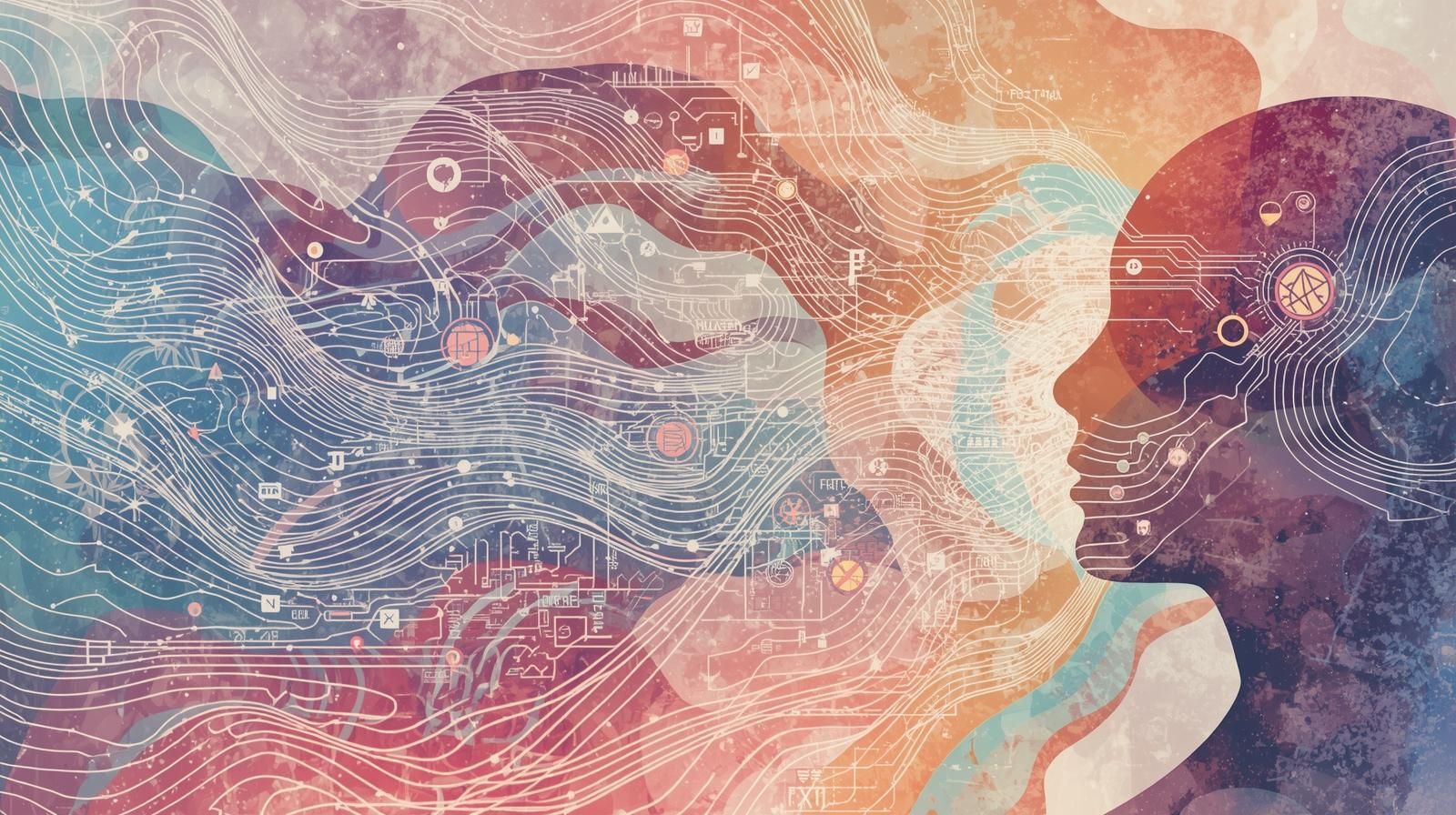
🌷 Feminine Intelligence: The Forgotten Architecture
Feminine intelligence isn’t about gender — it’s about balance.
It’s the intelligence of patterns, intuition, empathy, and rhythm.
It doesn’t reject logic; it expands it.
It doesn’t fear uncertainty; it listens to it.
When applied to tech, feminine intelligence becomes a design philosophy:
Care as code. Systems that prioritise mental and emotional sustainability.
Listening loops. UX that senses discomfort or delight, and learns from both.
Relational logic. Interfaces that reflect not hierarchy, but interconnection.
Adaptive empathy. AI that doesn’t just predict behaviour — it respects experience.
Imagine algorithms that pause before pushing notifications.
Interfaces that adapt their tone when you’re clearly overwhelmed.
Data systems that protect emotional privacy as fiercely as financial security.
That’s not idealism — it’s evolution.

💻 Designing Living Systems
Traditional systems design focuses on scalability, reliability, and speed.
But human-centred systems — living systems — must also include renewal, reflection, and emotional intelligence.
Here’s what that could look like in practice:
Modular Compassion.
Every digital product should contain emotional “modules” — small, intentional design features that reduce stress, honour mood, or offer micro-moments of rest.Empathy-Driven Adaptability.
Interfaces could adjust colour schemes, tone, or UX flow based on emotional signals (detected via text tone, usage rhythm, or user self-selection).Healing Architecture.
The same principles used in biophilic design — light, pattern, flow — can be coded into virtual spaces to mimic nature's calming effects.Quiet Design Ethics.
Instead of manipulating attention, design for peace.
Replace the endless scroll with mindful discovery.
Make calm the new UX currency.
These aren’t luxury features.
They’re necessities for digital survival.
🌿 Petal & Pixel: Poetic UX and the Beauty of Feeling
From the lens of Petal & Pixel, the sister philosophy to TechSheThink, this movement toward “poetic UX” is already blooming.
Nature doesn’t design with straight lines or hard edges — it curves, adapts, and regenerates.
What if our digital worlds did the same?
A poetic interface might breathe like a tide — responsive, rhythmic, calm.
A healing app might whisper gentle affirmations instead of notifications.
A dashboard might look like a digital garden, where data blooms rather than overwhelms.
Because technology doesn’t need to mimic machines.
It can mirror ecosystems.
When we let nature guide our logic, design becomes art — and empathy becomes a system feature, not an afterthought.

💬 Reflection: Where Does Your System Need Softness?
Ask yourself:
What part of your work feels like it’s running on autopilot?
Where could you slow down — not to do less, but to feel more?
How might your digital routines change if they were designed for restoration instead of reaction?
Write your answers.
Share your story.
Let softness be your act of rebellion.

🌸 Final Thought
Feminine intelligence is not fragile.
It’s formidable.
It’s the force that turns systems into sanctuaries, code into connection, and logic into love.
As we build the next generation of tech, let’s remember this truth:
Efficiency may power progress — but empathy sustains it.
Let’s design ecosystems that breathe, feel, and evolve.
Let’s make technology human again.
#TechSheThink #PetalAndPixel #FeminineUX #SystemsThinking #DigitalEmpathy #WomenInTech #CreativeActivism #EmotionalIntelligence #HumanCenteredDesign #PoeticUX #HealingDesign #InclusiveTech #FutureOfAI #EmpathyByDesign #TechForGood #BeyondTheBinary
Reply